Rich Dad Poor Dad: Key Ideas
Robert T. Kiyosaki’s Rich Dad Poor Dad (1997) is one of the best-selling personal finance books ever written, built on the contrast between how his two “dads” thought about money. These 24 cards cover the six lessons, the book’s definitions of assets, liabilities and wealth, and the habits it says keep people in the rat race.
Read the summary of Rich Dad Poor Dad →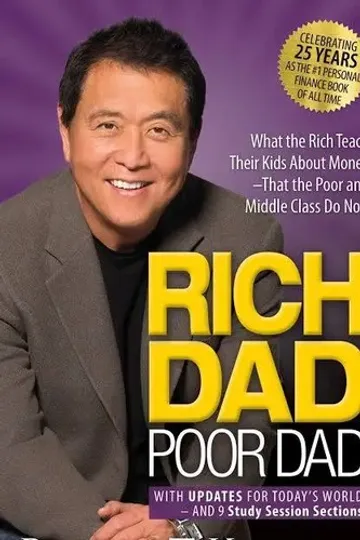
Practice this set for free — no account needed. Loads 24 flashcards into the learner.
Practice in the free learnerHow to study this set
Learn the six lessons in order, then practice sorting things you own into assets and liabilities by the book’s definition. That one test is the heart of the book.

All 24 flashcards
What is the core message of Rich Dad Poor Dad?
Most people work for money; the rich learn to make money work for them by acquiring assets.
Financial literacy, not income, decides who builds wealth.
Who is the “poor dad”?
Kiyosaki’s own father — highly educated, a government employee who struggled with money all his life.
He rose to head Hawaii’s education department.
Who is the “rich dad”?
The father of Kiyosaki’s best friend Mike — he never finished eighth grade but built a fortune in business.
Which phrase does rich dad forbid, and what does he ask instead?
“I can’t afford it” — replaced by “How can I afford it?”
The first shuts your mind down; the second puts it to work.
What is Lesson 1 of Rich Dad Poor Dad?
The rich don’t work for money.
Fear and desire keep most people trading their time for a paycheck.
What is Lesson 2 of Rich Dad Poor Dad?
Why teach financial literacy?
What counts is not how much you earn but how much you keep.
What is Lesson 3 of Rich Dad Poor Dad?
Mind your own business.
Your real business is your asset column, not your job.
What is Lesson 4 of Rich Dad Poor Dad?
The history of taxes and the power of corporations.
Owners use corporations to spend before tax; employees are taxed first.
What is Lesson 5 of Rich Dad Poor Dad?
The rich invent money.
Financial intelligence creates opportunities that others cannot see.
What is Lesson 6 of Rich Dad Poor Dad?
Work to learn — don’t work for money.
Choose jobs for the skills they teach, above all sales and communication.
How does Rich Dad Poor Dad define an asset?
Something that puts money in your pocket.
How does Rich Dad Poor Dad define a liability?
Something that takes money out of your pocket.
Why does Kiyosaki argue your home is not an asset?
It takes money out of your pocket every month — mortgage, taxes, upkeep — instead of bringing money in.
It is the book’s most debated claim.
How do the rich and the middle class differ in what they buy?
The rich buy assets that produce income; the middle class buys liabilities it believes are assets.
Which real assets does Kiyosaki recommend building?
Businesses that run without you, stocks, bonds, income-producing real estate and royalties from intellectual property.
What is the rat race?
Working to pay the bills, where every raise brings bigger spending and the cycle never ends.
Which two emotions does rich dad say drive most people’s financial lives?
Fear and desire.
Fear of being without money, and desire for what money can buy.
What does “pay yourself first” mean in the book?
Put money into your asset column before paying bills, and let the pressure push you to earn more.
How do employees and corporation owners differ on taxes?
Employees earn, pay tax, then spend; owners earn, spend through the corporation, then pay tax on what remains.
Which four areas make up financial IQ, according to rich dad?
Accounting, investing, understanding markets and the law.
Accounting is financial literacy: the ability to read numbers.
How does the book define wealth?
The number of days you could keep your current lifestyle if you stopped working today.
Kiyosaki takes the definition from Buckminster Fuller.
Which five obstacles keep financially literate people from building assets?
Fear, cynicism, laziness, bad habits and arrogance.
What did young Robert learn when rich dad paid him ten cents an hour, then nothing?
To stop working for money and look for opportunities — which led the boys to start a comic-book library.
Why does Kiyosaki call himself a “best-selling” rather than a “best-writing” author?
Selling and communicating often matter more for success than being the best at a craft.