The Let Them Theory: Key Ideas
Mel Robbins’s The Let Them Theory (2024), written with her daughter Sawyer Robbins, turns two words she once heard from her daughter Kendall into a tool for stress, self-doubt and relationships. These 24 cards cover the two halves of the theory, how it applies to other people’s opinions and emotions, and her frameworks for comparison, friendship and influence.
Read the summary of The Let Them Theory →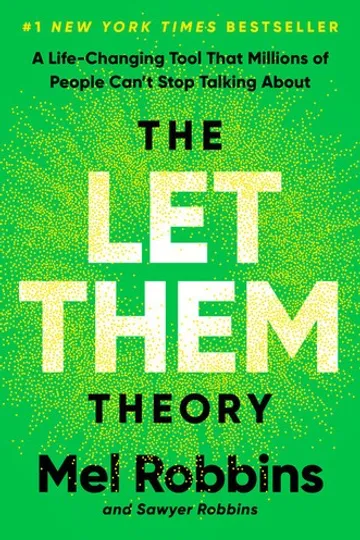
Practice this set for free — no account needed. Loads 24 flashcards into the learner.
Practice in the free learnerHow to study this set
For each card, say which half is at work — Let Them (what you release) or Let Me (what you do next). The book is built on that pairing.

All 24 flashcards
What is the core idea of The Let Them Theory?
Stop trying to control what other people think, say and do, and put that energy into your own choices.
What are the two halves of the Let Them Theory?
“Let Them” — release others to be who they are — and “Let Me” — take responsibility for what you do next.
Why does Robbins insist on the “Let Me” half?
Letting go alone is only half the tool; your power lies in choosing your own response.
How did Mel Robbins come across “Let Them”?
Her daughter Kendall kept telling her to “let them” while she tried to manage her son’s prom plans.
What does Robbins say you can actually control?
Only yourself — your thoughts, your actions and how you respond.
How does the theory help with stress?
“Let Them” stops you from fighting what you can’t control; “Let Me” is taking a breath and choosing your response.
Robbins explains stress as the brain switching into survival mode.
What should you do when people think badly of you?
Let them — you can’t control their opinions, so live by your own values anyway.
How should you respond when another adult has an emotional outburst?
Let them have their reaction; managing another adult’s emotions is not your job, but setting boundaries is.
Why can the right decision feel wrong?
Choices that follow your values can disappoint others, and that discomfort is not proof you chose badly.
How does Robbins reframe comparison?
As a teacher: envy points to what you want and can work toward.
Comparing traits you can’t change is only torture — let that kind go.
What are the three pillars of friendship?
Proximity, timing and energy.
Why do adult friendships often fade?
Proximity, timing or energy shift — people move and enter new life chapters — rarely because of personal failure.
What does Robbins call the break-up of friend groups after school?
The Great Scattering, when friends move to different places and life stages.
How long does it take to build a close friendship, per the research Robbins cites?
More than 200 hours spent together.
The figure comes from research at the University of Kansas.
How do you make new friends as an adult, according to Robbins?
Go first: start the conversation, make the invitation and keep showing up.
Can you make another person change?
No — people change only when they feel like it; you can influence them, not force them.
Why does pressuring someone to change backfire?
People are wired to want control, so pressure triggers resistance and prolongs the problem.
What is the ABC Loop?
A way to influence someone: apologize and Ask open questions, Back off and observe, Celebrate small wins.
How does social contagion help you influence people?
People adopt behaviors they see others enjoying, so model the change you hope for.
What happens when you keep rescuing someone?
They sink further: rescuing removes the consequences that could push them to change.
How does Robbins suggest supporting a struggling adult?
Create an environment that helps them heal, without solving their problems for them.
What does “let them show you who they are” mean?
Believe people’s behavior over their words — actions reveal how much you matter to them.
In dating, a mixed signal is itself a clear signal of low interest.
Does “Let Them” mean tolerating anything?
No — you stop controlling others, but you still decide what you will accept and set boundaries.
Which older ideas does the Let Them Theory echo?
Stoicism, radical acceptance and detachment.