Extended Devices
These 10 devices work at the level of structure and perspective — how much the reader knows, and when, and what a story’s shape itself communicates.
Practice this set for free — no account needed. Loads 10 flashcards into the learner.
Practice in the free learnerHow to study this set
Dramatic irony is easy to misuse — it specifically means the AUDIENCE knows something a character does not, not just any surprising twist.
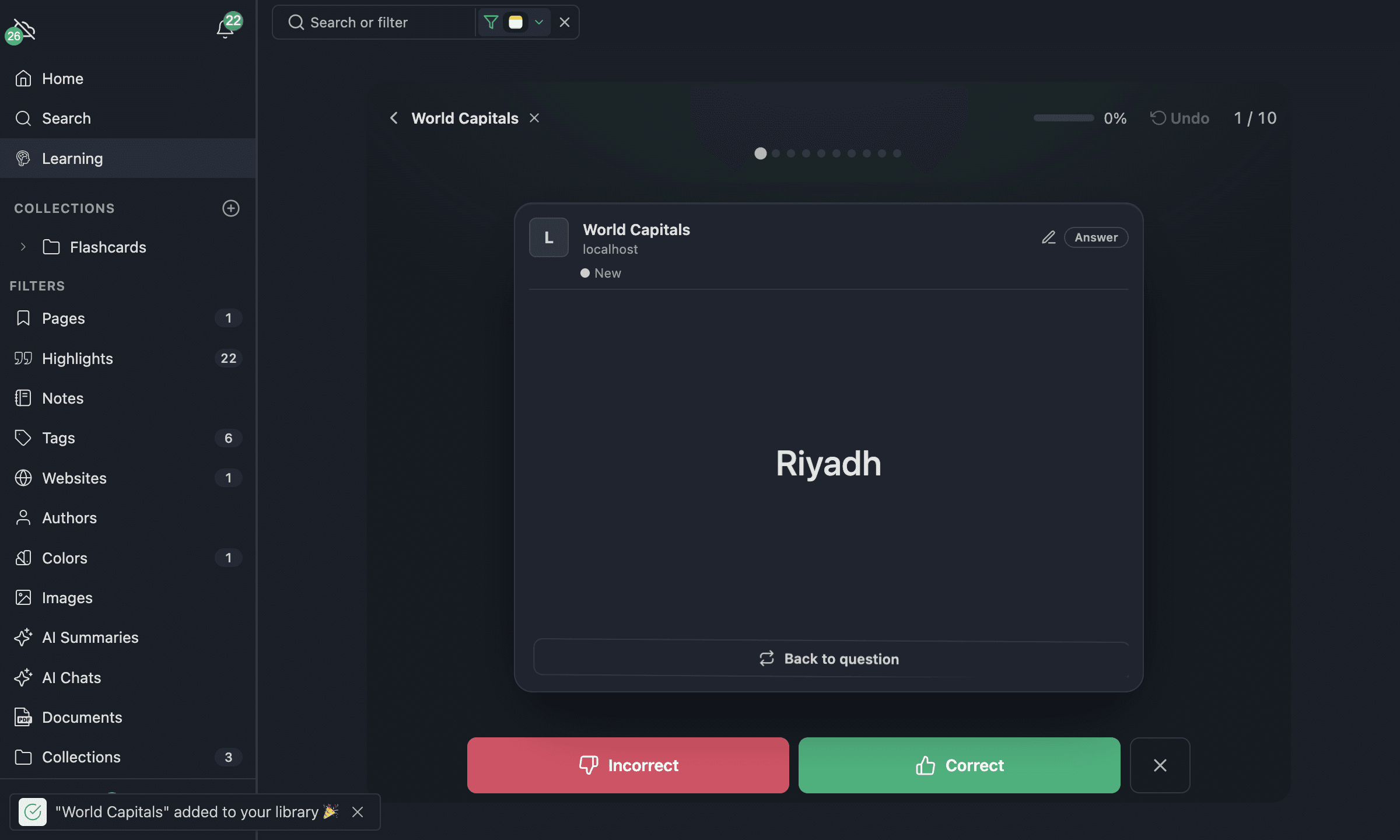
All 10 flashcards
Swap question and answerWhen the audience knows something important that a character does not.
Dramatic irony
The audience hears Claudius and Laertes plot the poisoned foil and cup, while Hamlet agrees to the fencing match unaware.
When the outcome of a situation is the opposite of what was expected.
Situational irony
Claudius and Laertes’ own poison plot backfiring on them is situational irony.
Saying the opposite of what is actually meant.
Verbal irony
Mark Antony’s repeated "Brutus is an honourable man" in Julius Caesar means the opposite of what it says.
A recurring image, idea, or structural element throughout a work.
Motif
Disguise and recognition recur as a motif throughout The Odyssey.
A story in which characters and events consistently represent a deeper, often moral or political, meaning.
Allegory
A story where every character stands for a specific vice or virtue is an allegory.
Beginning a story in the middle of the action, rather than at the true chronological start.
In medias res
The Odyssey begins years into Odysseus’ journey, not at the fall of Troy.
A story told within the structure of another, outer story.
Frame narrative
Odysseus recounting his own adventures to King Alcinous is a frame narrative within the poem.
A speech in which a character, usually alone on stage, reveals their inner thoughts to the audience.
Soliloquy
Hamlet’s "To be, or not to be" is among the most famous soliloquies in English drama.
A character whose traits contrast with another character, highlighting the second character’s qualities.
Foil
Laertes’ decisiveness makes him a foil for Hamlet’s hesitation.
An error of judgment or character flaw that leads to a tragic hero’s downfall.
Tragic flaw (hamartia)
Hamlet’s indecision is often read as his tragic flaw, a reading disputed because he also acts impulsively.
What to learn next
Next: Level 3, "Advanced Devices" — the terms that come up in the closest literary analysis.
Continue to Level 3: Advanced Devices →