Describing Charts & Trends
Writing Task 1 hands you a chart and twenty minutes — and the difference between band 6 and band 7 is almost always verb choice. "Went up" becomes "surged"; "went down a bit" becomes "dipped"; "stayed the same" becomes "plateaued". This deck drills the precise movement verbs, the comparison phrases, and the small connective words like "respectively" that let you describe data quickly and accurately under time pressure.
Practice this set for free — no account needed. Loads 13 flashcards into the learner.
Practice in the free learnerHow to study this set
Group the verbs by direction as you review: up (surge, climb), down (plummet, dip), flat (plateau, remain stable), irregular (fluctuate). When a card shows a movement verb, sketch the line shape in your head before flipping — tying each verb to a picture is what makes it usable in the exam.
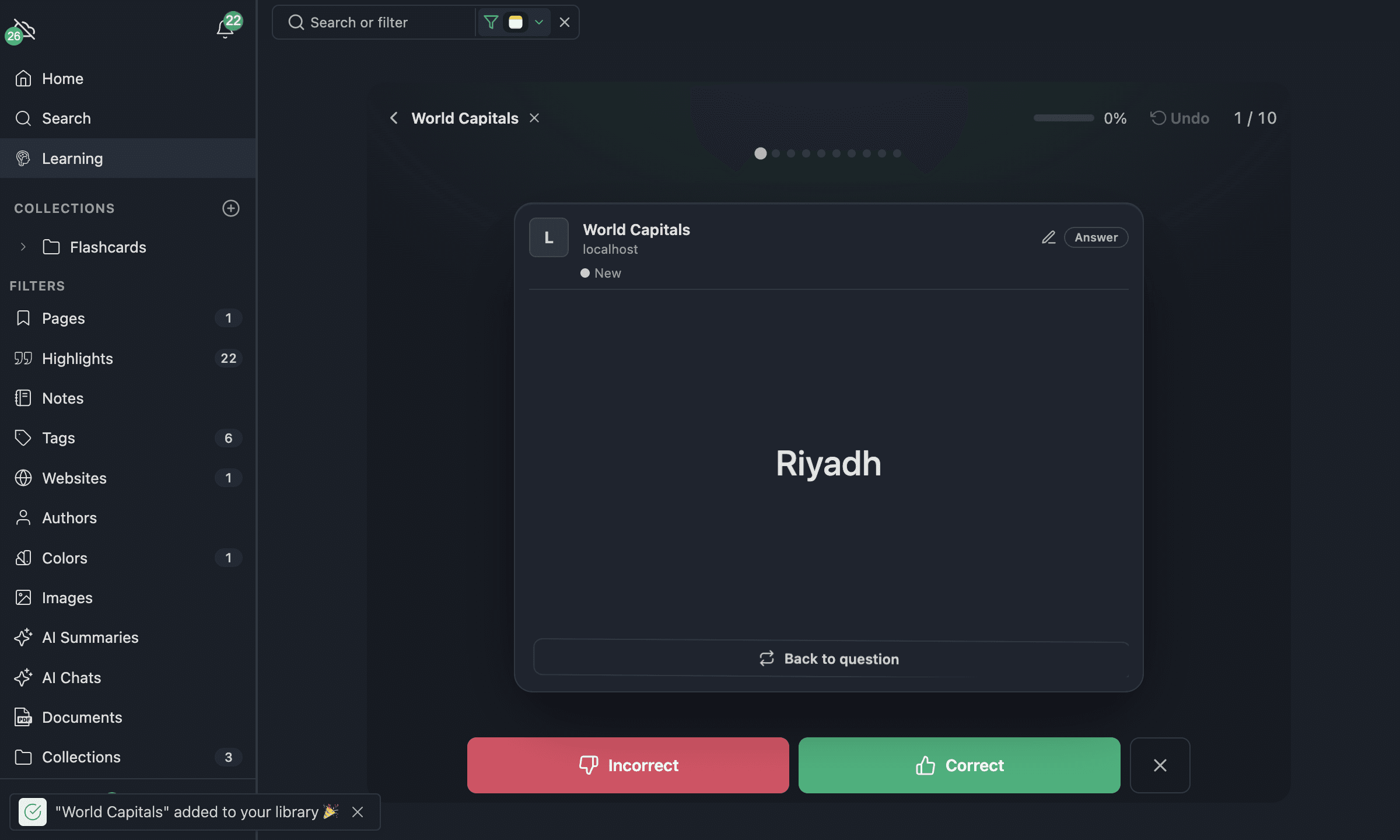
All 13 flashcards
What does it mean when a figure "surges"?
It rises suddenly and steeply. "Online sales surged during the holiday season."
What does "plummet" mean?
To fall very quickly and steeply. "Cinema attendance plummeted after streaming services launched."
What does "fluctuate" mean?
To rise and fall irregularly, without a clear direction. "Fuel prices fluctuated throughout the decade."
What does it mean when a value "plateaus"?
It stops rising or falling and levels off. "Smartphone ownership plateaued at around ninety per cent."
What is a "dip"?
A small, usually temporary fall. "The birth rate showed a brief dip in 2008 before recovering."
What does it mean when a figure "peaks"?
It reaches its highest point. "Energy demand peaks in the early evening."
How do you use "steadily" in a trend sentence?
To show constant, gradual change. "Rents rose steadily between 2010 and 2020."
What does "threefold" mean — as in "increased threefold"?
Three times as much; tripled. "The number of electric cars increased threefold in five years."
What does "outnumber" mean?
To be greater in number than something else. "By 2015, tablets outnumbered desktop computers in schools."
What is a "proportion"?
A part or share of a whole. "A growing proportion of the budget goes to healthcare."
How does "respectively" work in a sentence?
It matches items to values in the order given. "Coffee and tea accounted for 35% and 20% of sales respectively."
What does a "marginal" change mean?
A very small, barely significant change. "There was only a marginal increase in cycling to work."
What does "overtake" mean in data description?
To become larger than something that used to be ahead. "In 2019, renewables overtook coal in electricity generation."
What to learn next
With trend language in place, take on level 3, "Opinion & Argument Language" — the Task 2 essay vocabulary for advocating, conceding and weighing sides.
Continue to Level 3: Opinion & Argument Language →