Everyday IELTS Topics
IELTS questions circle a familiar set of themes — education, the environment, health, cities and work — and each theme has a small core of words that unlock it. This deck gives you that core: the nouns and adjectives that let you discuss school systems, traffic and pollution without reaching for vague words like "thing" or "stuff". Learn these first; every later level builds sentences on top of them.
Practice this set for free — no account needed. Loads 13 flashcards into the learner.
Practice in the free learnerHow to study this set
Say each word inside its example sentence, not on its own — IELTS examiners score words in use, and the sentence is what your memory will actually retrieve in the Speaking test. After each session, pick two words you just reviewed and improvise one sentence about your own city or job with them.
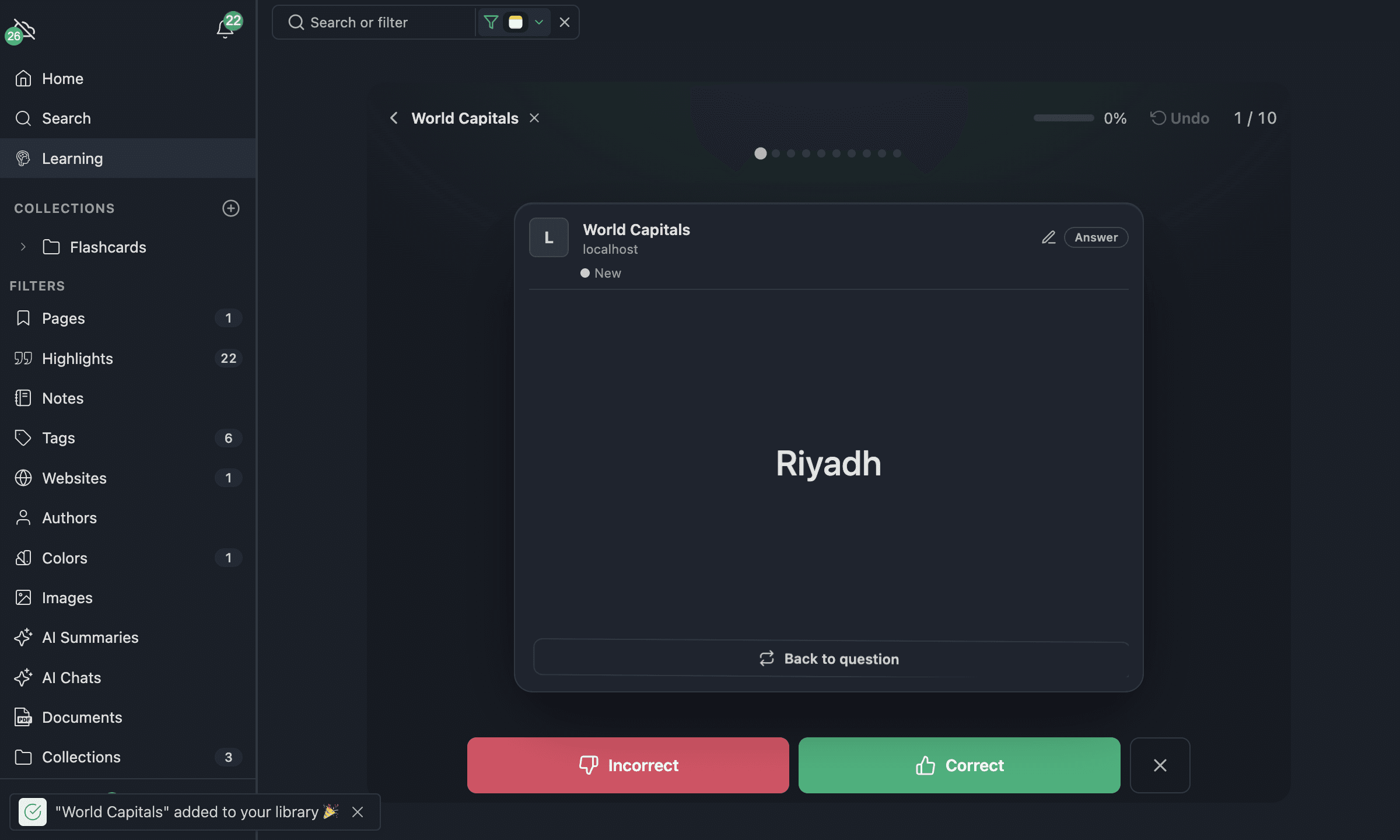
All 13 flashcards
What does "curriculum" mean?
The set of subjects and content a school or course teaches. "Critics argue the national curriculum leaves little room for the arts."
What does "tuition" mean?
Teaching or instruction, especially paid — and, in everyday use, the fees for it. "Private tuition gives wealthier students an advantage."
What does "literacy" mean?
The ability to read and write — often extended, as in digital or financial literacy. "Digital literacy is now as essential as numeracy."
What does "sustainable" mean?
Able to continue long-term without exhausting resources or harming the environment. "Cities need sustainable transport systems, not more lanes."
What are "emissions"?
Gases or substances released into the air, especially greenhouse gases from vehicles and industry. "Carbon emissions from aviation keep climbing."
What does "congestion" mean?
Severe overcrowding, most often of traffic. "A congestion charge cut inner-city traffic within a year."
What does "urbanisation" mean?
The shift of population from the countryside into cities. "Rapid urbanisation puts pressure on housing and public transport."
What is "infrastructure"?
The basic physical systems a society runs on — roads, railways, power, water, internet. "Ageing infrastructure holds back economic growth."
What does "sedentary" mean?
Involving a lot of sitting and little exercise. "Sedentary lifestyles are a major driver of obesity."
What does "well-being" mean?
A person's overall state of health, comfort and happiness. "Employers increasingly measure staff well-being, not just output."
What is "life expectancy"?
The average number of years a person can expect to live. "Life expectancy has risen by a decade in two generations."
What is a "commute"?
The regular journey between home and work. "Remote work has cut the daily commute for millions."
What is the "workforce"?
All the people working or available to work in a country or company. "An ageing workforce forces employers to rethink retirement."
What to learn next
Once the topic words feel automatic, move to level 2, "Describing Charts & Trends" — the Writing Task 1 verbs for rises, falls and plateaus that every chart question expects.
Continue to Level 2: Describing Charts & Trends →