The 1800s
The shortest level in the deck, and the one that hinges on a single event: the Civil War. Four of these questions are about it directly — what it was called, what caused it, what Lincoln did, and what the Emancipation Proclamation actually accomplished.
Practice this set for free — no account needed. Loads 10 flashcards into the learner.
Practice in the free learnerHow to study this set
The Emancipation Proclamation card accepts four different answers, and the plain "freed the slaves" is one of them — you do not have to name the Confederacy to be marked correct. Historically it applied to the Confederate states rather than the whole country, which is why the three longer answers exist, but any one of the four is accepted.
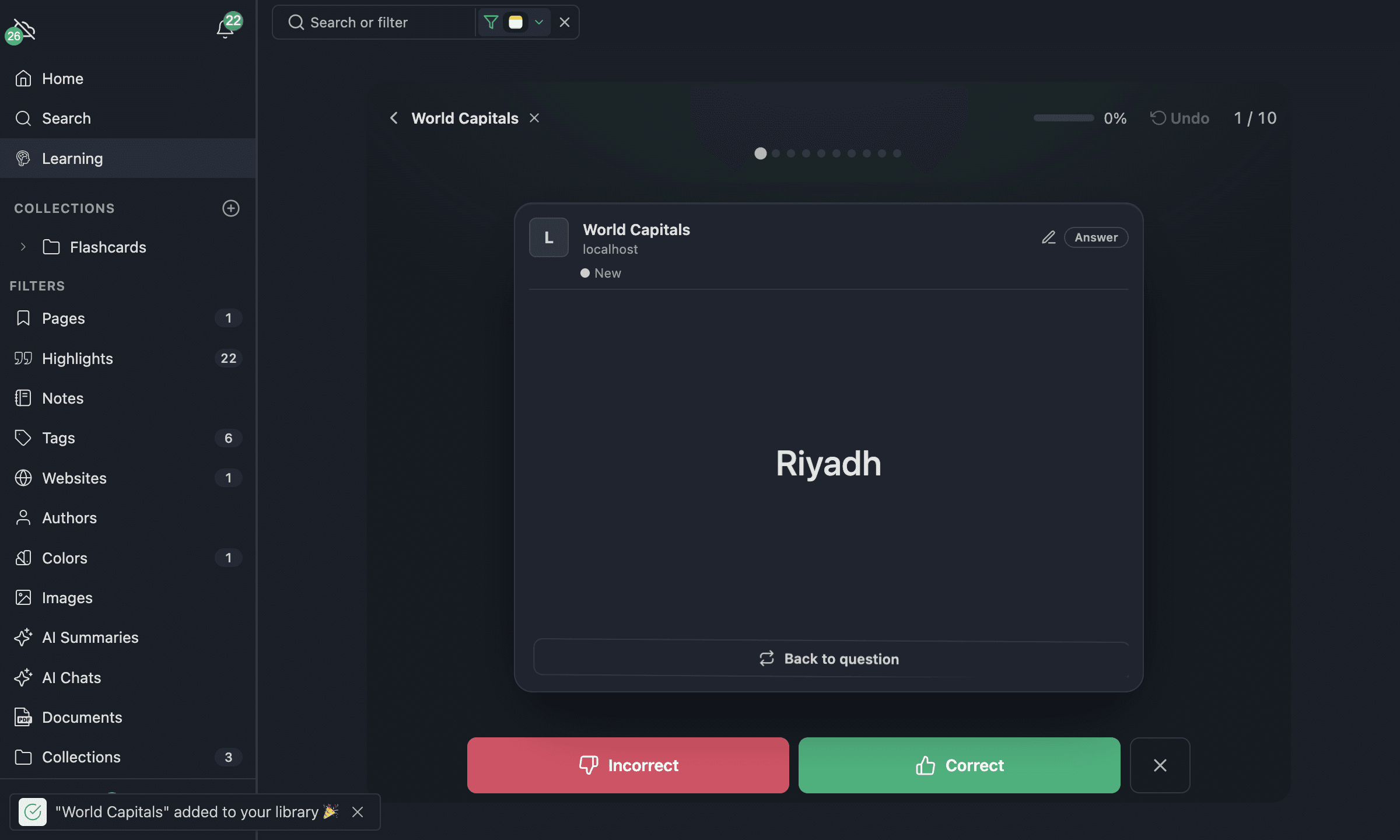
All 10 flashcards
What territory did the United States buy from France in 1803?
The Louisiana Territory; Louisiana
Name one war fought by the United States in the 1800s.
War of 1812; Mexican-American War; Civil War; Spanish-American War
Name the U.S. war between the North and the South.
The Civil War
Abraham Lincoln is famous for many things. Name one.
Freed the slaves (Emancipation Proclamation); saved (or preserved) the Union; led the United States during the Civil War; 16th president of the United States; delivered the Gettysburg Address
What did the Emancipation Proclamation do?
Freed the slaves; freed slaves in the Confederacy; freed slaves in the Confederate states; freed slaves in most Southern states
Name one leader of the women’s rights movement in the 1800s.
Susan B. Anthony; Elizabeth Cady Stanton; Sojourner Truth; Harriet Tubman; Lucretia Mott; Lucy Stone
The Civil War had many important events. Name one.
(Battle of) Fort Sumter; Emancipation Proclamation; (Battle of) Vicksburg; (Battle of) Gettysburg; Sherman’s March; (Surrender at) Appomattox; (Battle of) Antietam/Sharpsburg; Lincoln was assassinated
What U.S. war ended slavery?
The Civil War
What amendment says all persons born or naturalized in the United States, and subject to the jurisdiction thereof, are U.S. citizens?
14th Amendment
When did all men get the right to vote?
After the Civil War; during Reconstruction; (with the) 15th Amendment; 1870
What to learn next
Next: Level 3, Recent American History — the world wars through September 11.
Continue to Level 3: Recent American History →