Characters
The Odyssey has a large cast, but a handful of characters carry the whole story. These 10 questions cover the ones worth knowing well.
Practice this set for free — no account needed. Loads 10 flashcards into the learner.
Practice in the free learnerHow to study this set
Sort the characters into three groups: Odysseus’ family, the people he meets on his journey, and the suitors back home.
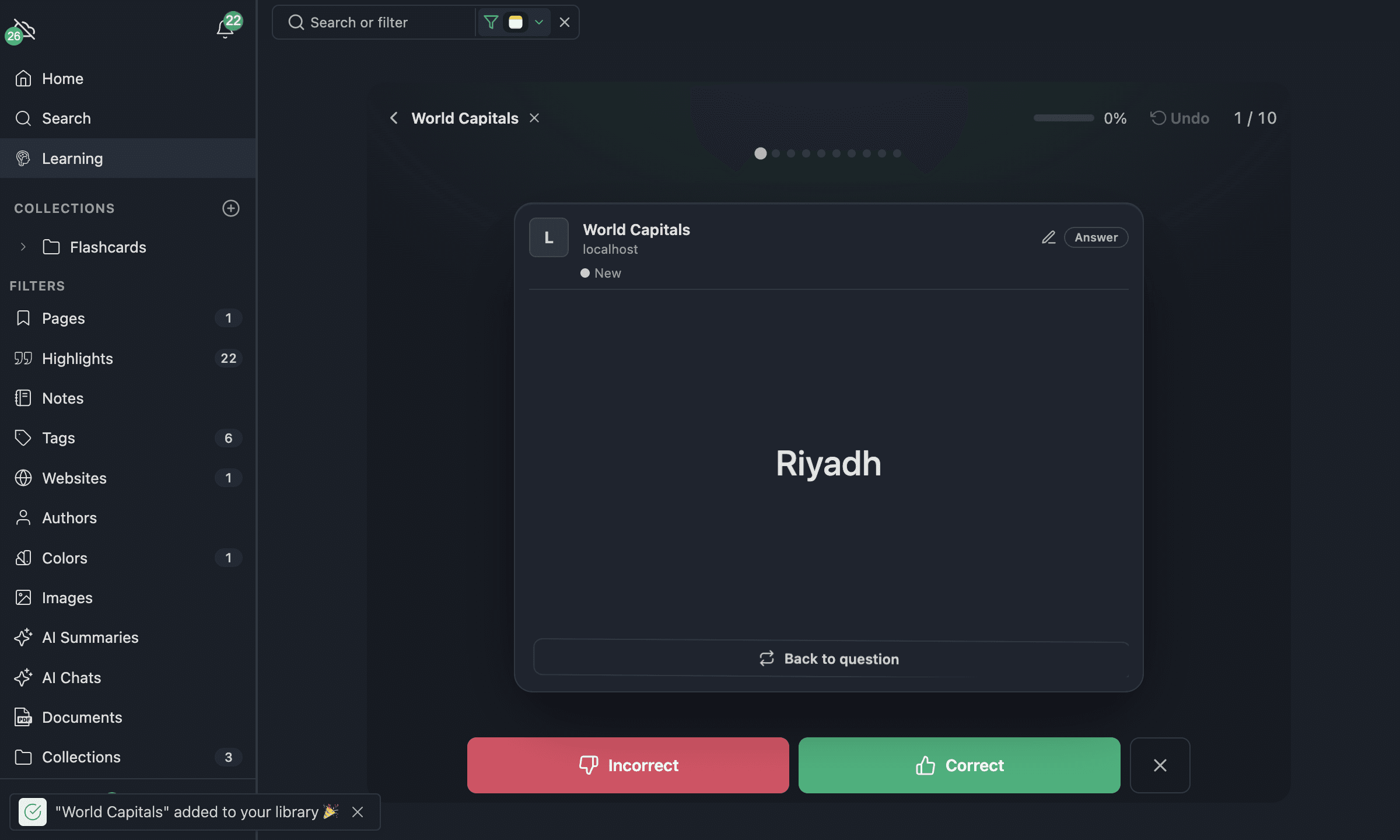
All 10 flashcards
What is Odysseus’ role before the events of The Odyssey begin?
King of Ithaca and a hero of the Trojan War.
He is known for his cunning, notably devising the Trojan Horse.
Who is Telemachus?
Odysseus and Penelope’s son.
He is a young man by the time his father returns, and searches for news of him.
What is Penelope known for throughout the poem?
Her loyalty and cleverness in delaying the suitors.
She unweaves her weaving each night to stall her decision.
Who are the suitors?
A group of men who have moved into Odysseus’ home, competing to marry Penelope.
They assume Odysseus is dead and are wasting his household’s resources.
What role does the goddess Athena play in the story?
She repeatedly helps and guides Odysseus and Telemachus.
She is a patron of Odysseus throughout the poem.
Who is Eumaeus?
Odysseus’ loyal swineherd, who shelters him upon his return, not recognizing him at first.
He represents loyalty among Odysseus’ household staff.
What happens to Odysseus’ old dog, Argos, when Odysseus returns?
Argos recognizes him despite his disguise, then dies.
One of the story’s most quietly emotional moments.
Who is Antinous?
The most aggressive and arrogant of the suitors.
He is typically the first suitor Odysseus kills.
What disguise does Odysseus use when he first returns to Ithaca?
He is disguised as an old beggar, with Athena’s help.
This lets him observe the suitors before revealing himself.
Who is Eurycleia?
Odysseus’ old nurse, who recognizes him by a scar on his leg.
She keeps his identity secret once she realizes who he is.
What to learn next
Next: Level 3, "Themes and Motifs" — the ideas underneath the plot.
Continue to Level 3: Themes and Motifs →