LSAT Basics
Before drilling arguments, know the machine you are up against. The LSAT is a reasoning exam, not a law exam: it asks whether you can find conclusions, evaluate support and read dense prose fast, and it asks in a very consistent vocabulary — stimulus, stem, inference. This deck covers the exam's structure, scoring and terminology so that from your first practice section onwards, the instructions cost you zero seconds and zero surprises.
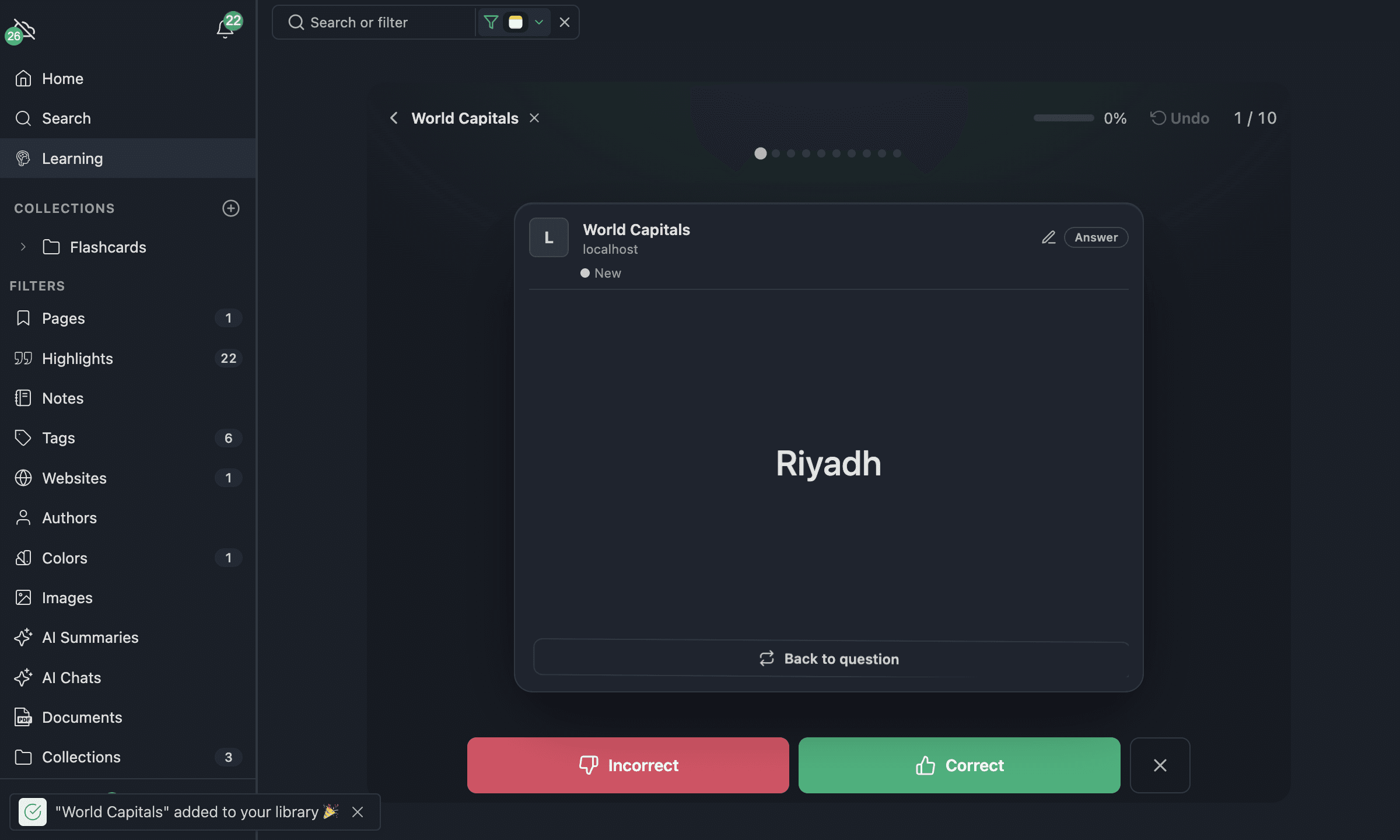
Practice this set for free — no account needed. Loads 13 flashcards into the learner.
Practice in the free learnerHow to study this set
These cards are quick wins — clear them early and revisit them rarely. The terminology cards (stimulus, stem, inference) matter more than the logistics ones: they are the words every explanation you will ever read is written in, so lock them in before starting a prep book.
All 13 flashcards
What does the LSAT actually test?
Reading and reasoning — analysing arguments and dense passages. It requires no legal knowledge at all.
What is the LSAT score range, and roughly what is average?
Scores run from 120 to 180; the median sits near 151–152. Elite programmes typically look for high 160s and up.
Which section types make up the scored LSAT today?
Two scored Logical Reasoning sections and one scored Reading Comprehension section, plus one unscored experimental section. (Logic Games were retired in 2024.)
How long do you get per LSAT section?
35 minutes per section, regardless of section type.
What is the "experimental" section?
An unscored section used to test future questions. It is not identified during the exam — so treat every section as if it counts.
What is LSAT Writing?
A separate, unscored argumentative essay completed online. Law schools receive it alongside your score — unpolished writing can still hurt an application.
Is there a penalty for wrong answers on the LSAT?
No — only correct answers count. Never leave a question blank; always guess before time expires.
What is the "stimulus" of a Logical Reasoning question?
The short passage (usually an argument or set of facts) the question is about — everything you are allowed to rely on.
What is the "question stem"?
The actual task under the stimulus — e.g. "Which one of the following most weakens the argument?" Read it carefully; it defines what a right answer even is.
What does "inference" mean on the LSAT — and how is that different from everyday use?
Something that MUST be true given the stimulus — not something merely plausible or likely, which is how the word is used casually.
What does the Reading Comprehension section look like?
Four dense passages (one of them a comparative pair of shorter texts) with questions on main point, structure, tone and specific claims.
Why do LSAT prep plans revolve around full timed sections rather than untimed drilling?
Because the exam's real constraint is pace: roughly 85 seconds per Logical Reasoning question. Accuracy that collapses under time pressure is not yet real accuracy.
Can you retake the LSAT, and do schools see old scores?
Yes — retakes are common and capped per testing year and lifetime; schools see your score history but most weigh the highest score.
What to learn next
Structure understood? Level 2, "Arguments & Their Parts", starts the real work: finding conclusions and premises quickly — the skill every Logical Reasoning question is built on.
Continue to Level 2: Arguments & Their Parts →