Constitutional Basics
Before you can argue about rights or challenge a statute you need the frame that holds a state together: its constitution. A constitution sets out who may make, enforce and interpret the law, and it ranks above every ordinary rule the state produces. This first set covers the ideas taught in constitutional law everywhere — what a constitution is and does, why it is treated as supreme, how power is divided among the branches of government, and what people mean by the rule of law. Keep the examples general; the principles here hold across most constitutional democracies.
Practice this set for free — no account needed. Loads 15 flashcards into the learner.
Practice in the free learnerHow to study this set
Anchor each term to the problem it solves — separation of powers exists so that no one body makes, enforces and judges the law at once. Learn the three branches as a set, then the check each one places on the others. When two ideas look similar, such as separation of powers and checks and balances, write one sentence on how they differ so the pair stays distinct.
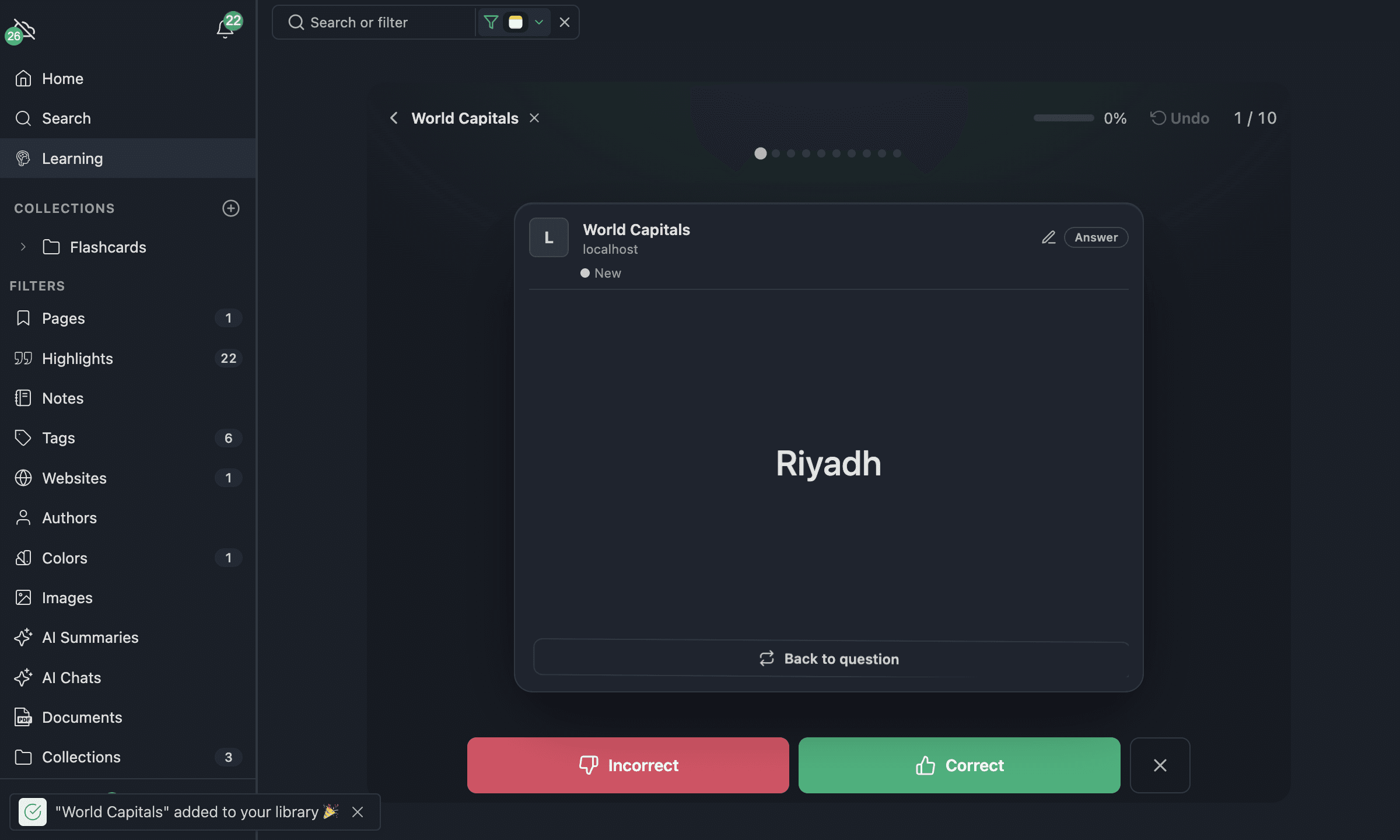
All 15 flashcards
What is a constitution?
The fundamental set of rules that establishes a state’s institutions, allocates their powers, and sets limits on how those powers may be used
It is the highest-ranking law, against which all other laws are measured.
What is the difference between a written (codified) and an unwritten (uncodified) constitution?
A written constitution is set out in a single authoritative document; an unwritten one is drawn from many sources such as statutes, court decisions and long-standing conventions
Most states have a codified constitution; a few rely on an accumulation of laws and conventions instead.
What does the supremacy of the constitution mean?
The constitution ranks above all other law, so any statute or act of government that conflicts with it is invalid
What is the separation of powers?
The principle that state power is divided among distinct branches so that no single body both makes and enforces and judges the law
Usually the legislature, the executive and the judiciary.
What are the three branches of government?
The legislature, the executive, and the judiciary
What is the role of the legislature?
To make and amend the law by enacting statutes
Legislatures are often called parliaments, congresses or assemblies.
What is the role of the executive?
To carry out and enforce the law and to run the day-to-day administration of the state
What is the role of the judiciary?
To interpret and apply the law and to resolve disputes by deciding cases
What are “checks and balances”?
Arrangements that let each branch of government limit the others, preventing any one branch from concentrating power
For example, a legislature passes a law but a court may review whether it is constitutional.
What is the rule of law?
The principle that everyone, including the government, is bound by and accountable under the law, applied equally and predictably
Under the rule of law, is anyone above the law?
No — officials and ordinary citizens alike are subject to the same law and must answer to it
Why does the separation of powers guard against tyranny?
Because splitting power among independent branches means no single actor can make, apply and enforce the law without restraint
What is the difference between a constitutional monarchy and a republic?
In a constitutional monarchy the head of state is a monarch whose powers are limited by the constitution; in a republic the head of state is elected or appointed rather than hereditary
What is a “bill of rights” within a constitution?
A part of the constitution that lists the fundamental rights and freedoms guaranteed to individuals against the state
What makes a constitution “rigid” rather than “flexible”?
A rigid constitution can be changed only through a special, harder amendment procedure; a flexible one can be altered by ordinary legislation
What to learn next
With the structure of government clear, level 2, "Rights & Liberties", turns to what a constitution guarantees to the individual — due process, equality, and the core freedoms a state may not casually override.
Continue to Level 2: Rights & Liberties →