Core 1L Doctrines
The first year of law school is famously built around a handful of subjects: contracts, torts, criminal law and property. Each has a small set of black-letter rules that everything else hangs from — the elements of a contract, the four elements of negligence, the two halves of a crime, the divide between real and personal property. Get these rules automatic and the cases become far easier to follow, because you can see which element the court is really fighting about.
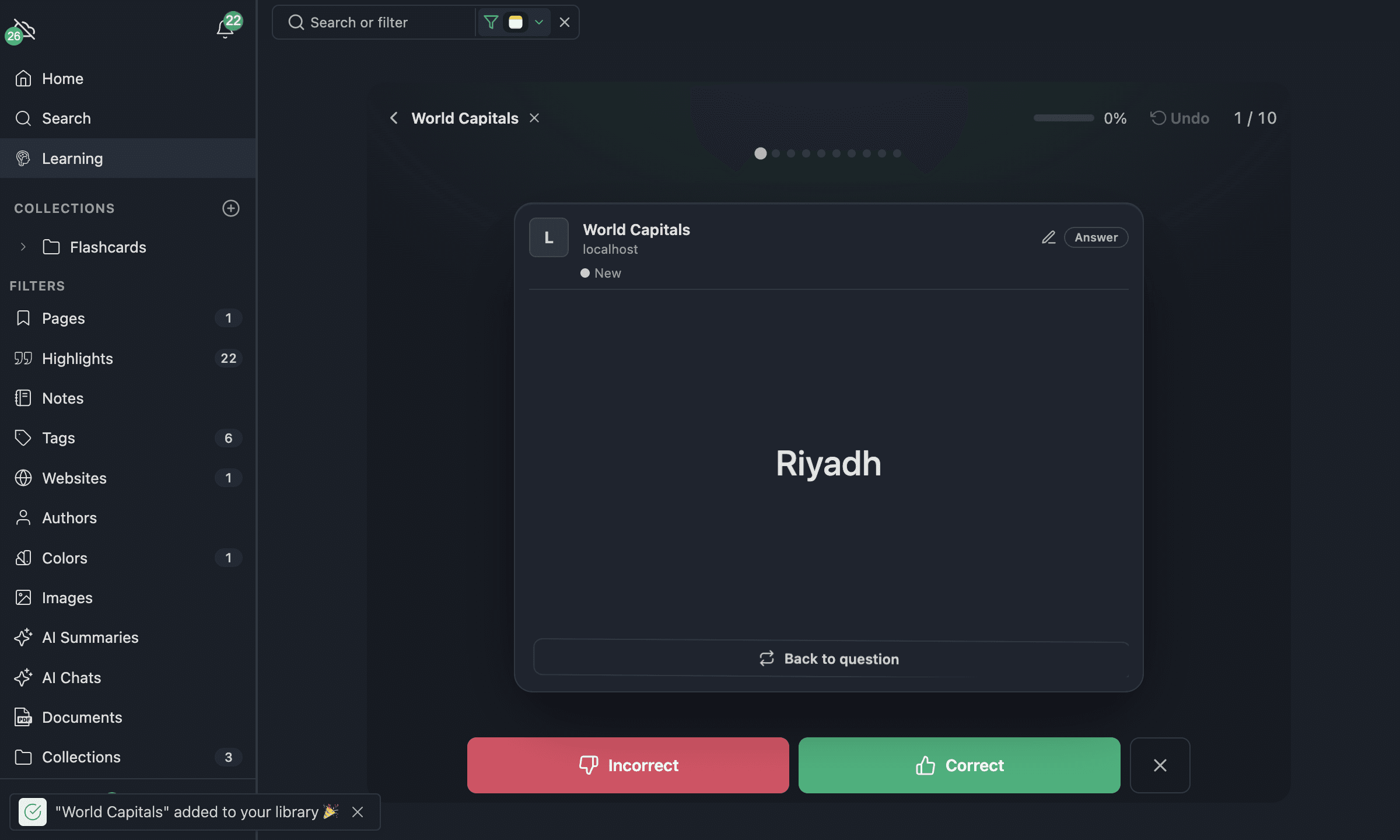
Practice this set for free — no account needed. Loads 14 flashcards into the learner.
Practice in the free learnerHow to study this set
Learn the elements as checklists you can rattle off from memory (offer, acceptance, consideration; duty, breach, causation, damages). In the exam you apply each element to the facts in turn, so the recall has to be instant. When a card gives an example, try to invent a second example of your own — that is the test of real understanding.
All 14 flashcards
What are the three basic elements required to form a contract?
Offer, acceptance, and consideration
Consideration is the bargained-for exchange of value; many systems also require an intention to create legal relations.
In contract law, what is “consideration”?
Something of value that each party gives or promises as part of the bargain
What is a breach of contract?
A failure to perform a contractual obligation without a lawful excuse
In tort law, what are the four elements of negligence?
Duty, breach, causation, and damages
The defendant owed a duty of care, breached it, and that breach caused the plaintiff’s harm.
What is a tort?
A civil wrong (other than breach of contract) that causes harm and for which the law gives a remedy
Examples include negligence, battery, and defamation.
What is the “reasonable person” standard in negligence?
An objective standard that measures conduct against how a reasonably careful person would have acted
What are the two general elements of a crime?
Actus reus and mens rea
A guilty act and a guilty mind — the prohibited conduct plus the required mental state.
What does “mens rea” refer to?
The guilty mind — the mental state required for a crime
What does “actus reus” refer to?
The guilty act — the physical conduct that makes up a crime
What is the general difference between a felony and a misdemeanor?
A felony is a serious crime, typically punishable by more than a year in prison; a misdemeanor is a lesser offence
In property law, what is “real property”?
Land and the things permanently attached to it
It is contrasted with personal property, which is movable.
What is “personal property”?
Movable property that is not land or permanently attached to it (also called chattels)
What is a “fee simple” in property law?
The most complete form of land ownership, potentially lasting forever and freely transferable
What are “damages” as a remedy in a contract or tort case?
A sum of money awarded to compensate for loss or injury
What to learn next
You now hold the doctrines the whole first year turns on. Level 3 adds the finishing layer — the Latin terms and maxims that fill casebooks and courtrooms, so you can read them fluently instead of stumbling.
Continue to Level 3: Latin Legal Terms & Maxims →