Advanced Expressions
Advanced expressions are the idioms that make English sound truly native — the ones that turn up in newspapers, meetings and clever conversation. "Bite the bullet" and "the ball is in your court" carry a whole situation in a few words, and using them well signals real fluency. This final set collects the sophisticated idioms worth knowing, each with a plain meaning and an example sentence so you can deploy them naturally rather than just recognise them.
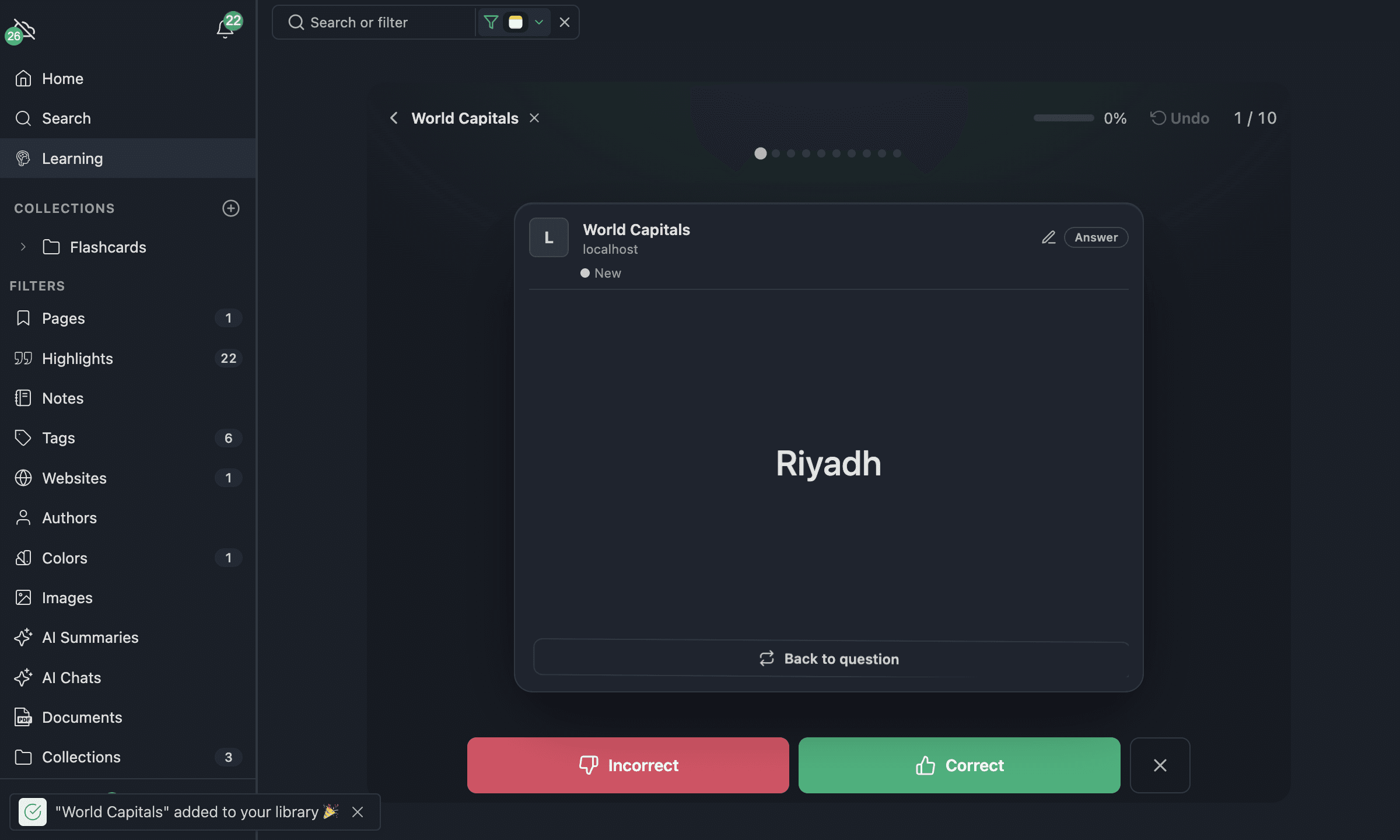
Practice this set for free — no account needed. Loads 15 flashcards into the learner.
Practice in the free learnerHow to study this set
These idioms reward context, so learn the situation each one fits: "the ball is in your court" belongs to a moment when it is someone else’s turn to act. Once the meaning is solid, challenge yourself to slip one into an email or conversation this week — using it once beats reviewing it ten times.
All 15 flashcards
What does the idiom “bite the bullet” mean?
To force yourself to do something unpleasant you have been avoiding
She decided to bite the bullet and finally book the dentist.
What does the expression “the ball is in your court” mean?
It is now your turn to take action or make a decision
I have made my offer; now the ball is in your court.
What does the idiom “cut corners” mean?
To do something cheaply or quickly by skipping steps, lowering quality
They cut corners on the building and it soon started to leak.
What does the idiom “on the fence” mean?
Undecided between two options
I am still on the fence about which car to buy.
What does the idiom “the last straw” mean?
The final problem that makes a difficult situation unbearable
His rude remark was the last straw, and she resigned that day.
What does the idiom “steal someone’s thunder” mean?
To take attention or credit away from someone else
She stole his thunder by announcing the results first.
What does the idiom “beat around the bush” mean?
To avoid talking about something directly
Stop beating around the bush and tell me what happened.
What does the idiom “burn the midnight oil” mean?
To work late into the night
He burned the midnight oil to finish the report on time.
What does the idiom “throw in the towel” mean?
To give up or admit defeat
After three failed attempts, they threw in the towel.
What does the idiom “jump on the bandwagon” mean?
To join an activity or trend because it has become popular
Many brands jumped on the bandwagon once the app went viral.
What does the idiom “the tip of the iceberg” mean?
A small, visible part of a much larger, hidden problem
These complaints are just the tip of the iceberg.
What does the idiom “go the extra mile” mean?
To make more effort than is expected of you
Our staff always go the extra mile for their customers.
What does the idiom “read between the lines” mean?
To understand a hidden or implied meaning that is not stated directly
Read between the lines and you can tell she is unhappy.
What does the idiom “add fuel to the fire” mean?
To do or say something that makes a bad situation worse
Shouting back only added fuel to the fire.
What does the idiom “a storm in a teacup” mean?
A lot of fuss and worry over something unimportant
The whole argument was a storm in a teacup and blew over by lunch.
What to learn next
That rounds out the Idioms & Phrasal Verbs path — common idioms, phrasal verbs and advanced expressions. Keep all three decks in your review rotation so the expressions stay ready when you need them.