Everyday Vocabulary
The fastest way to feel more fluent in English is to grow the everyday vocabulary that sits just above the basics — words like reluctant, diligent and inevitable that you meet constantly in articles, emails and conversation. This first set collects high-frequency intermediate words, each paired with a short definition and an example sentence so you learn not just what the word means but how it is actually used.
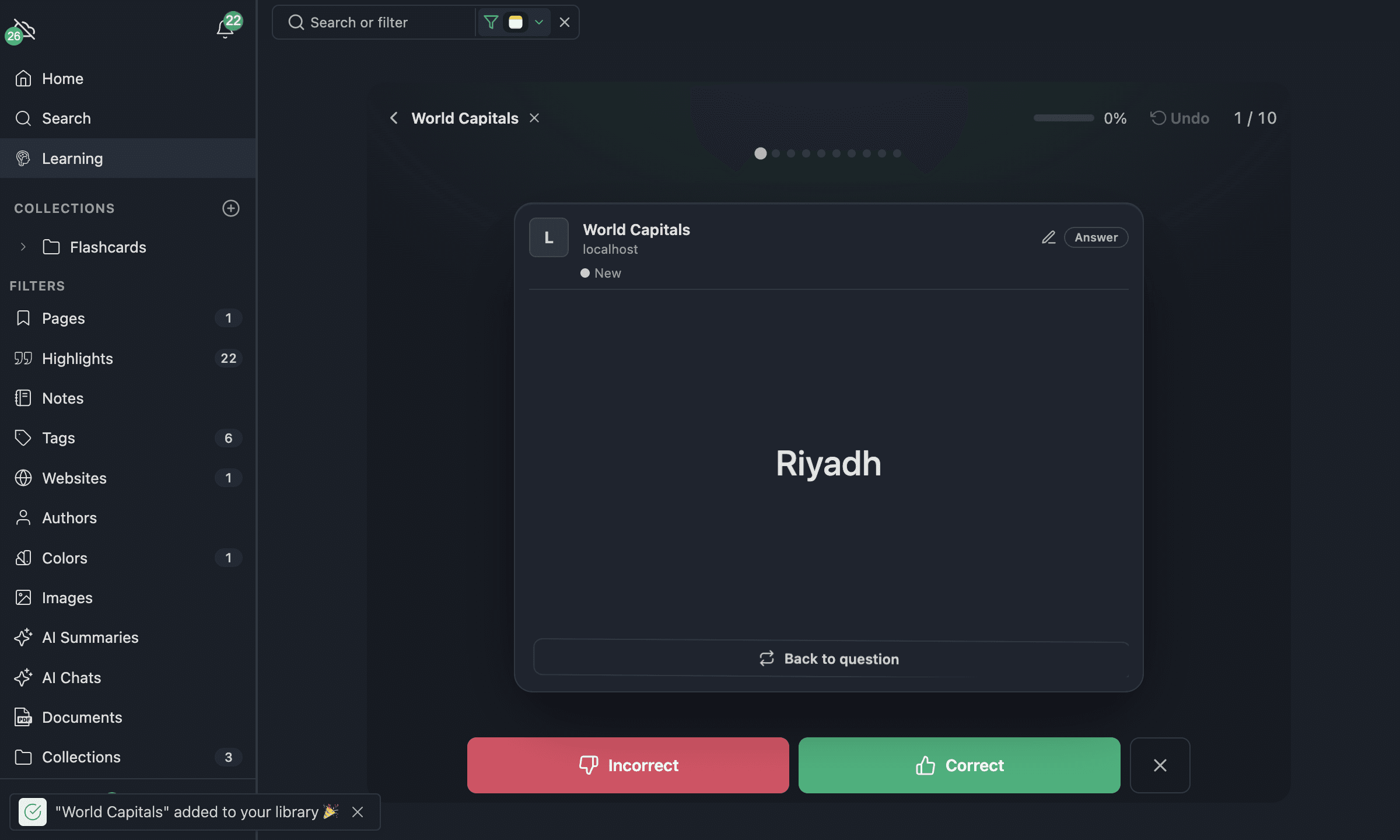
Practice this set for free — no account needed. Loads 15 flashcards into the learner. The learner asks it as shown here: phrase first, meaning second.
Practice in the free learnerHow to study this set
Do not stop at the definition — read the example sentence aloud and then invent one of your own about your day. A word you can use in a sentence you made up is a word you truly own. Reviewing a little every day beats cramming; spaced repetition is built for exactly this.
All 15 flashcards
Swap question and answerExisting in large quantities; plentiful
What does “abundant” mean?
The garden had an abundant supply of tomatoes.
Unwilling or hesitant to do something
What does “reluctant” mean?
She was reluctant to leave the party so early.
Hardworking and careful in what you do
What does “diligent” mean?
A diligent student, she checked every answer twice.
Real and authentic; not fake
What does “genuine” mean?
He gave a genuine smile of relief.
Certain to happen; unavoidable
What does “inevitable” mean?
With no rain for months, the drought was inevitable.
Polite and respectful
What does “courteous” mean?
She sent a courteous reply to every email.
Extreme tiredness
What does “fatigue” mean?
He felt a deep fatigue after the long hike.
Enough for a particular purpose
What does “sufficient” mean?
We packed sufficient food for the whole trip.
To expect or predict something
What does “anticipate” mean?
We anticipate a busy weekend at the shop.
Done on purpose; intentional
What does “deliberate” (adjective) mean?
Ignoring the message was a deliberate choice.
Good enough; satisfactory for the purpose
What does “adequate” mean?
The room had adequate lighting to read by.
To continue firmly despite difficulty or opposition
What does “persist” mean?
She persisted until she finally solved the puzzle.
Producing strong, clear images in the mind; bright and lively
What does “vivid” mean?
He gave a vivid description of the sunset.
To pause before acting because of doubt or nervousness
What does “hesitate” mean?
Do not hesitate to ask if you need help.
Absolutely necessary; extremely important
What does “essential” mean?
Water is essential for life.
What to learn next
Once these everyday words feel natural, it is time to sound sharper in writing. Level 2 moves on to academic vocabulary — the words that essays, reports and exams call for.
Continue to Level 2: Academic Vocabulary →