Why Memory, Retention & Recall Matter in Online Learning
Learn why learning retention of memory matters in online learning and how recall, notes, and active study methods help information stay longer.

You read something online, it makes sense at the time, and a few days later, it is gone. Most online learners deal with this. You go through the lesson material, follow the ideas in the moment, and still struggle to remember them later.
That usually is not a motivation problem or a sign that you are bad at learning. It is a memory problem. In online learning, memory, retention, and recall determine whether information stays with you or disappears after a single reading.
This article explains why these three processes matter in online learning and how to improve them with study methods that actually help information stick.
What Are Memory, Retention, and Recall?
Memory in learning is the process of taking in information, storing it, and retrieving it later. Learning retention refers to how well that information stays available over time, while recall is the ability to bring it back when needed during exams, discussions, writing, or research. These three parts of the memory process shape knowledge retention in online learning.
Memory
Memory is where learning starts. It is the brain’s way of taking in new information and beginning memory formation.
When you watch a lecture, read an article, or listen to a class discussion, that information first passes through sensory memory and working memory. If you pay attention and actively process it, some of it moves from short-term to long-term memory.
For example, when you read a lesson and understand a key concept for the first time, that is memory at work. It is the first step in information retention.
Retention
Retention means how well learned information stays with you over time. It is the difference between understanding something today and still being able to use it next week.
Good learning retention leads to long-term retention and stronger long-term knowledge retention. Weak retention means the information fades after the first reading or video. This is why many students feel like they “studied” but still cannot remember much later.
A simple example is remembering lecture concepts several days after class instead of forgetting them once the tab is closed. That is retention of memory in action.
Recall
Recall is the ability to bring stored information back when you need it. This is what shows whether learning actually stayed with you.
You use recall when you answer exam questions without looking at notes, explain a concept during a group discussion, or bring up research findings while writing an assignment. Recall depends on strong storage, but it also depends on practice. This is why retrieval practice is such an important part of learning science and cognitive science.
Seeing something and thinking “this looks familiar” is not the same as recall. True recall means you can produce the idea on your own and apply it.
A simple way to think about it
- Memory = taking information in
- Retention = keeping that information over time
- Recall = retrieving it when needed
In online learning, these three work together.
First, you encode the idea. Then you keep it. Then you retrieve it. That is how knowledge retention turns into actual learning instead of temporary exposure.
Why Online Learning Makes Memory Harder
Online learning gives you access to more training content, videos, articles, and lessons than ever. But easy access does not always lead to strong learning retention.
A lot of digital learning is built around quick consumption. You read, scroll, watch, and move on. That may feel productive in the moment, but it often leads to weak memory formation and poor information retention.
Passive reading habits
One of the biggest problems in online learning is passive reading. You look at the material, understand it while it is in front of you, and assume it has been learned.
But reading without effort usually keeps information in working memory or short-term memory for only a short time. If the brain does not actively process it, that information may never reach long-term memory.
This is why passive review and rote learning often fail. You may recognize the material later, but recognition is not the same as recall.
Multitasking and distractions
Digital learning usually happens on the same screen where everything else is happening, too. One tab has your lesson open, another has a search result, and your phone or laptop keeps pulling your attention somewhere else. A message pops up, you check one thing, and suddenly your focus is gone.
That constant switching adds cognitive load and can lead to cognitive overload. When your attention is divided, your brain has less room to process ideas properly. That weakens the memory process and makes knowledge retention harder.
Scrolling instead of studying
A lot of students confuse exposure with learning.
Reading more pages, skimming more articles, or watching more videos can feel like progress. But scrolling through content is not the same as studying it.
Without pause, reflection, or active annotation, information stays shallow. It may pass through sensory memory, but it often does not stay long enough to support long-term retention.
Lack of interaction with the material
Memory gets stronger when learners do something with information. That includes asking questions, writing notes, summarizing, comparing ideas, or testing themselves.
Online learning often misses that step. Many learners just consume material without using active learning, retrieval practice, or even simple annotation. That makes transfer of learning harder because the idea was never processed deeply enough to be used later.
This matters in many settings, from student coursework to employee training, learning and development, and even clinical environments where accurate recall supports better on-the-job performance.
Limited review cycles
A lot of online learners go through the material once and then move on. The problem is, memory fades when you do not come back to the information.
Without review, the brain treats what you learned as temporary.
That weakens long-term knowledge retention. Methods such as the spacing effect, spaced repetition, and a bit of over learning work better because they give your brain repeated chances to store and retrieve the same idea.
Information exposure is not the same as learning
This is the main issue: just seeing information does not mean you have learned it.
Watching a lesson with video captions, reading slides, or skimming notes can help with understanding, but it does not guarantee learning retention.
Learning works better when you stop and do something with the material. That could mean thinking about it, writing a note, making a connection, or reviewing it later. That is what learning science and cognitive science keep showing.
It does not matter whether the content comes from visual and text learning, microlearning modules, scenario-based training, Social Learning, or self-study. Information stays with you longer when you interact with it and come back to it again.
How the Brain Stores Information During Learning
Learning is not just about seeing information once. For something to stick, the brain has to take it in, store it, and make it usable later. That is the basic memory process behind learning retention.
You can think of it in three stages: encoding, storage, and retrieval.
1. Encoding
Encoding is the process by which the brain starts processing new information.
It begins with sensory memory. You see a sentence, hear a lecture point, or read a definition. If you pay attention, that information enters working memory, where the brain begins making sense of it.
2. Storage
Storage is what happens when information is kept in the brain over time. This is where information retention, knowledge retention, and retention of memory start to matter.
For learning to move into long-term memory, the brain usually needs more than one quick exposure. It helps when students:
- connect new ideas with what they already know
- organize related concepts together
- explain the material in their own words
- revisit the topic more than once
This is how memory systems start building stronger connections.
3. Retrieval
Retrieval is the ability to access stored knowledge later. This is what happens when you answer a question, recall a research finding, or apply a concept in a test or discussion.
Retrieval shows whether learning actually lasted.
If information is stored well but never practiced, recall can still feel difficult. That is why retrieval practice is such an important part of learning science and cognitive science.
Simple examples of retrieval include:
- answering a question without looking at notes
- recalling a lecture concept during an exam
- using a research idea while writing an assignment
What actually makes learning stick?
Learning becomes more durable when students do three things consistently:
1. Connect new ideas with existing knowledge
This helps the brain attach new information to something it already understands, which improves long-term retention.
2. Interact with information
Highlighting, note-taking, summarizing, and questioning all support active learning and better memory formation.
3. Revisit material regularly
Review helps move information from short-term memory toward long-term memory. This is where methods such as spaced repetition support stronger long-term knowledge retention.
The main point is simple: memory gets stronger when learning is active, connected, and repeated. That is how information becomes easier to retain and recall later.
Why Retention Matters in Education?
Retention matters because learning is only useful if you can still use it later. If information disappears after one class, one reading, or one video, it does not help much when you actually need it.
This is why learning retention, information retention, and retention of memory matter so much in education.
Better Exam Performance
Exams do not measure whether something looked familiar last week. They measure whether you can bring information back when it counts.
Strong knowledge retention helps students:
- remember concepts during tests
- explain ideas clearly without guessing
- apply what they learned to new questions
Without long-term memory, even well-studied material can disappear under pressure.
Stronger Academic Understanding Over Time
Education is cumulative. One topic often depends on another. If earlier ideas do not stay in memory, later lessons become harder to follow.
Good long-term retention helps students connect concepts across units, subjects, and semesters. That kind of connection supports transfer of learning, not just short-term performance.
Better Research Productivity
Retention also matters when students read and write often. If you cannot remember what you read, research becomes slow and repetitive.
Strong long-term knowledge retention helps when you need to:
- recall research papers while writing
- compare arguments across sources
- remember where a certain idea fits in your topic
This reduces mental strain on working memory and makes it easier to focus on analysis instead of constantly re-reading.
Professional Skill Development
Retention is not only academic. It also affects skills acquisition, knowledge transfer, and later on-the-job performance.
This matters in:
- employee training
- learning and development
- training procedures
- clinical environments
If people forget what they learned right after training, the result is weak performance and poor business outcomes. Whether someone is studying for school or learning for work, the goal is the same: information needs to stay useful beyond the first exposure.
Without Retention, Learning Stays Temporary
This is the main point. Without retention, learning becomes temporary. You may understand something in the moment, but that is not enough.
For learning to last, information has to move beyond short-term memory and become stable enough for later recall. That is what turns a lesson into usable knowledge instead of something you once read and quickly forgot.
Why Recall Is the Real Test of Learning
A lot of students think they know something because it looks familiar. They read the page, look at their notes, and feel confident.
But familiarity is not the same as learning. Real learning shows up when you can retrieve the idea without seeing it first. That is what recall tests are.
Students often think they know the material because:
- the topic looks familiar
- the notes seem clear
- the answer makes sense when they read it
That feeling can be misleading. Recognition is passive. Recall is active.
Recall means bringing information back on your own
Recall happens when you answer a question without looking at your notes, explain a concept from memory, or use an idea in writing without going back to the source.
That takes more than short-term memory. It depends on strong memory formation, solid learning retention, and the ability to retrieve information from long-term memory when needed.
For example:
- seeing an answer and thinking “yes, I know this” is recognition
- writing the answer yourself without help is recall
That difference matters a lot in exams, research, and discussion.
Why active recall works better than passive review
This is why active recall methods usually work better than passive review. Re-reading notes may make the material feel familiar, but it does not always improve knowledge retention.
Methods based on retrieval practice force the brain to do the harder job of pulling information back. That strengthens long-term retention and makes later recall easier.
A few simple examples:
- answering practice questions
- summarizing a topic from memory
- using flashcards
- pausing after a lesson and recalling the main points
These methods improve the memory process because retrieval itself helps learning stick.
Recall is what shows whether learning stayed
If you can only understand something when it is in front of you, the learning is still weak. If you can retrieve it later and use it correctly, that is a much better sign of real understanding.
That is why recall is the real test of learning. It shows whether information moved beyond exposure and became usable knowledge.
Why Recall Is the Real Test of Learning
A lot of students confuse recognition with learning. The page looks familiar, the notes seem clear, and the answer makes sense to them. However, that does not always mean the information is stored well.
Recall is different. It means retrieving information without looking at it first. That is what matters in exams, writing, and discussion.
This is why active recall works better than passive review. Re-reading may help with familiarity, but retrieval practice does more for learning retention, knowledge retention, and access to long-term memory.
Simple recall methods include:
- practice questions
- summarization from memory
- flashcards
- direct knowledge retrieval without notes
If you can bring the idea back on your own, the learning is much stronger.
Proven Techniques That Improve Learning Retention
Better learning retention does not come from reading more. It comes from using study methods that help the brain store and retrieve information more effectively.
These techniques are supported by learning science and cognitive science because they improve memory formation, knowledge retention, and access to long-term memory.
1. Active Recall
Active recall means retrieving information without looking at your notes. This is one of the most effective forms of retrieval practice because it trains the brain to bring information back on its own.
Simple ways to do it:
- answering questions from memory
- summarizing a topic without notes
- self-testing after reading
This helps move information beyond short-term memory and supports stronger long-term retention.
2. Spaced Repetition
Spaced repetition means reviewing material over increasing intervals instead of cramming it once. This method is based on the spacing effect, which shows that memory improves when review is spread out over time.
For example, you might review a concept:
- later the same day
- two days later
- one week later
This repeated review strengthens information retention, supports long-term knowledge retention, and reduces forgetting.
3. Elaborative Learning
Elaborative learning means connecting new ideas to what you already know. This helps the brain build stronger links inside existing memory systems.
A few simple ways to do this:
- explain the idea in your own words
- compare it with something you already understand
- link concepts across subjects
This improves semantic memory, supports transfer of learning, and makes recall easier later.
4. Annotation and Highlighting
Annotation and highlighting turn reading into active learning. Instead of just skimming the page, you stop, notice what matters, and respond to it.
When you highlight key points or add short notes, you reduce passive reading and improve memory. It also helps manage cognitive load because important ideas are easier to find and review later.
This is one reason active reading works better for retention of memory than simply rereading the same material.
Why Structured Notes Improve Recall
A lot of students collect useful information, but do not organize it well. They save links, screenshots, PDFs, and random notes, then struggle to find anything when they need it.
Structured notes fix that problem. They improve knowledge retrieval by turning scattered material into searchable ideas, grouped concepts, and faster revision points. This supports learning retention, information retention, and stronger access to long-term memory.
Instead of keeping notes everywhere, it helps to build a simple knowledge library. When ideas are clearly sorted, knowledge retention becomes easier because the brain doesn't have to sift through clutter to recall what matters.
Building a Personal Knowledge System While Learning Online
Online learning works better when students do more than just read and move on. A simple personal knowledge system helps turn scattered information into something usable later.
That can include:
- highlighting important sections
- adding short notes
- tagging concepts by topic
- reviewing ideas again later
This kind of workflow supports learning retention and knowledge retention because it turns reading into organized knowledge building, not just temporary exposure.
How Web Highlights Supports Memory, Retention & Recall in Online Learning
Web Highlights fits naturally into the kind of study workflow that improves learning retention. Instead of reading something once and losing it later, you can keep the useful parts, organize them, and come back to them when needed.
1. Highlight web pages, PDFs, and YouTube transcripts
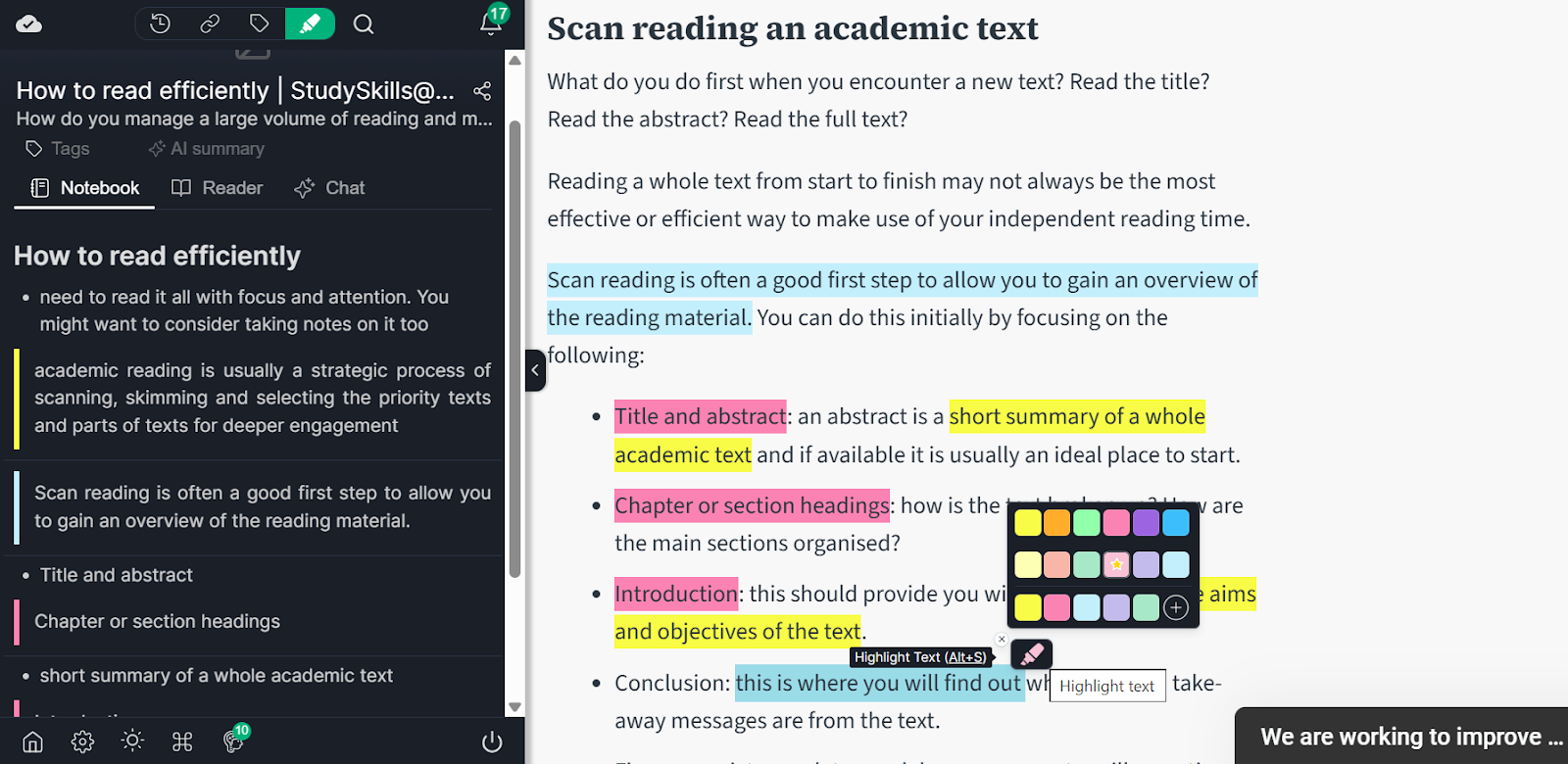
A lot of online learning happens across different formats. One day it is an article, the next day it is a PDF, and later it is a lecture on YouTube.
Web Highlights helps by allowing you to highlight all of them in one place, including YouTube transcripts. That matters for knowledge retention because your study process stays consistent. You are not switching between separate tools for web pages, PDFs, and video-based learning.
One highlighter for everything makes active reading easier across the sources students already use.
2. Add contextual notes while reading
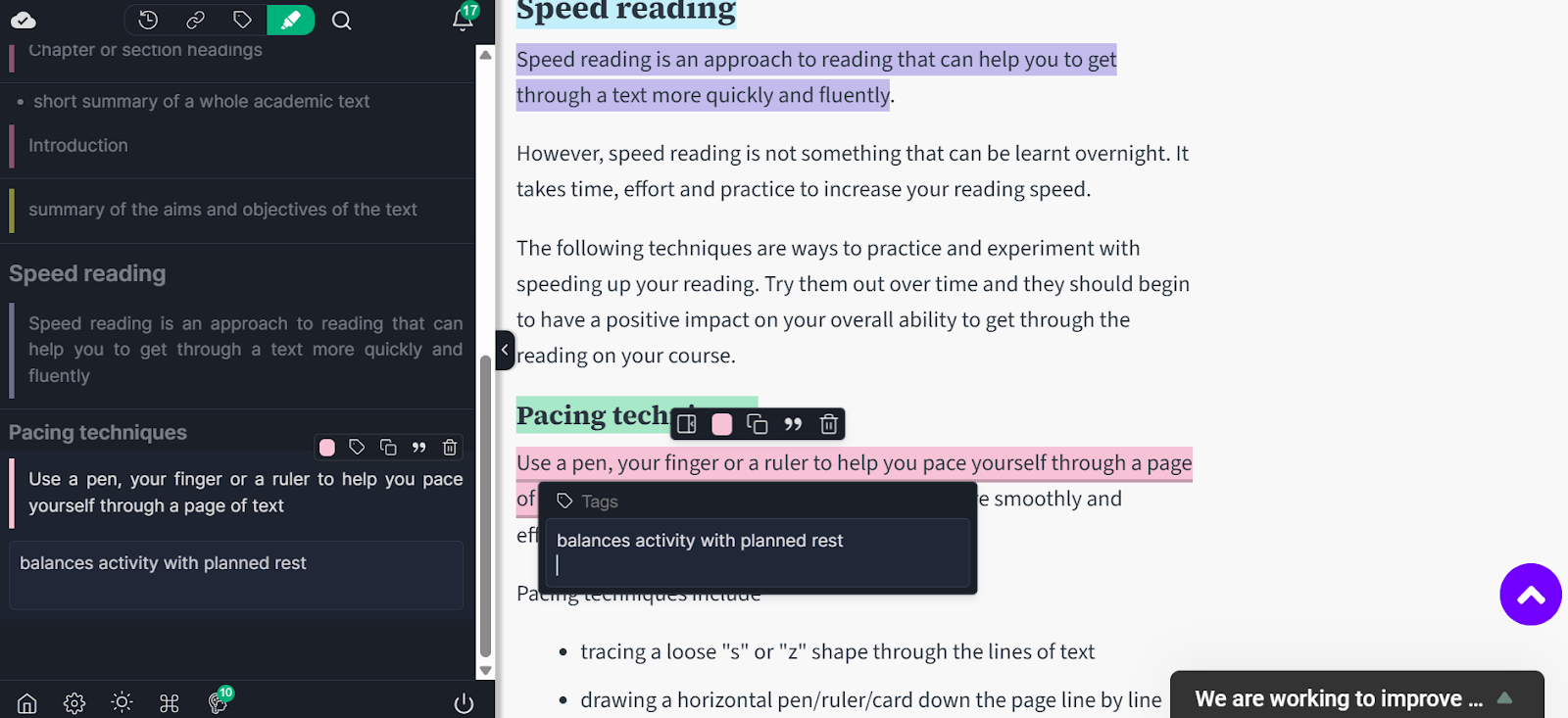
Highlighting alone is helpful, but adding a note makes the idea easier to remember later.
With Web Highlights, you can attach short notes next to what you highlighted. That supports memory formation because you are not just marking text. You are processing it. Writing a quick thought, question, or takeaway turns passive reading into active learning.
This kind of annotation also helps reduce cognitive load during revision because the meaning is already attached to the source.
3. Tag research ideas and group concepts
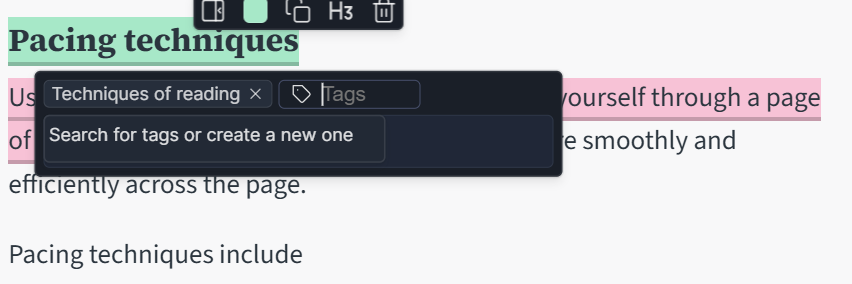
A common problem in online learning is saving good material but not knowing how to organize it later.
Web Highlights lets you tag highlights and notes, which helps group related concepts. That supports information retention and knowledge retrieval because ideas are easier to sort by theme, topic, course, or research area.
Instead of random saved content, you start building a simple structure that supports recall.
4. Organize a searchable library
Recall gets easier when your notes are not scattered. Web Highlights helps organize saved material into a searchable library, so you can find highlights, notes, and sources without digging through tabs or folders.
That is useful for long-term retention because revision becomes faster. It also supports working memory by reducing the effort needed to locate information before you can use it.
5. Export what you read and keep using it
Learning often continues outside the original page. Students may want to move ideas into a study guide, research doc, or note-taking system.
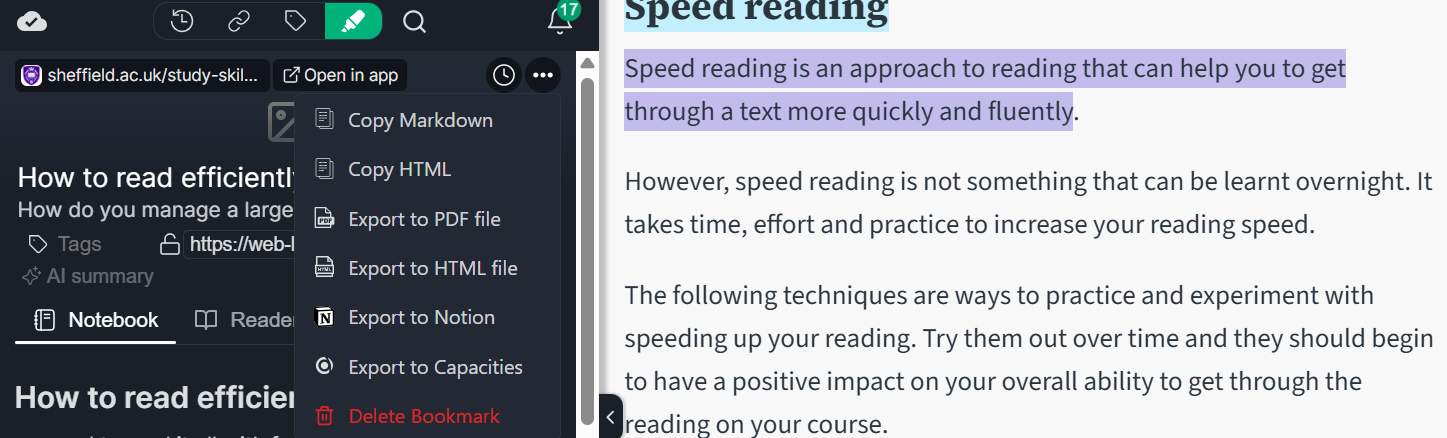
Web Highlights lets you export highlights and web annotations to formats such as Markdown , PDF, and HTML — or send them directly to Notion and Capacities with one click. You can also copy highlights as Markdown and paste them into Obsidian . That helps with knowledge transfer because important ideas can flow into the rest of your study workflow rather than getting trapped in a single browser tab.
6. Review highlights with spaced repetition flashcards
Retention improves when learners come back to the material, not just collect it once. That is exactly what the Learn & Remember feature in Web Highlights is built for.
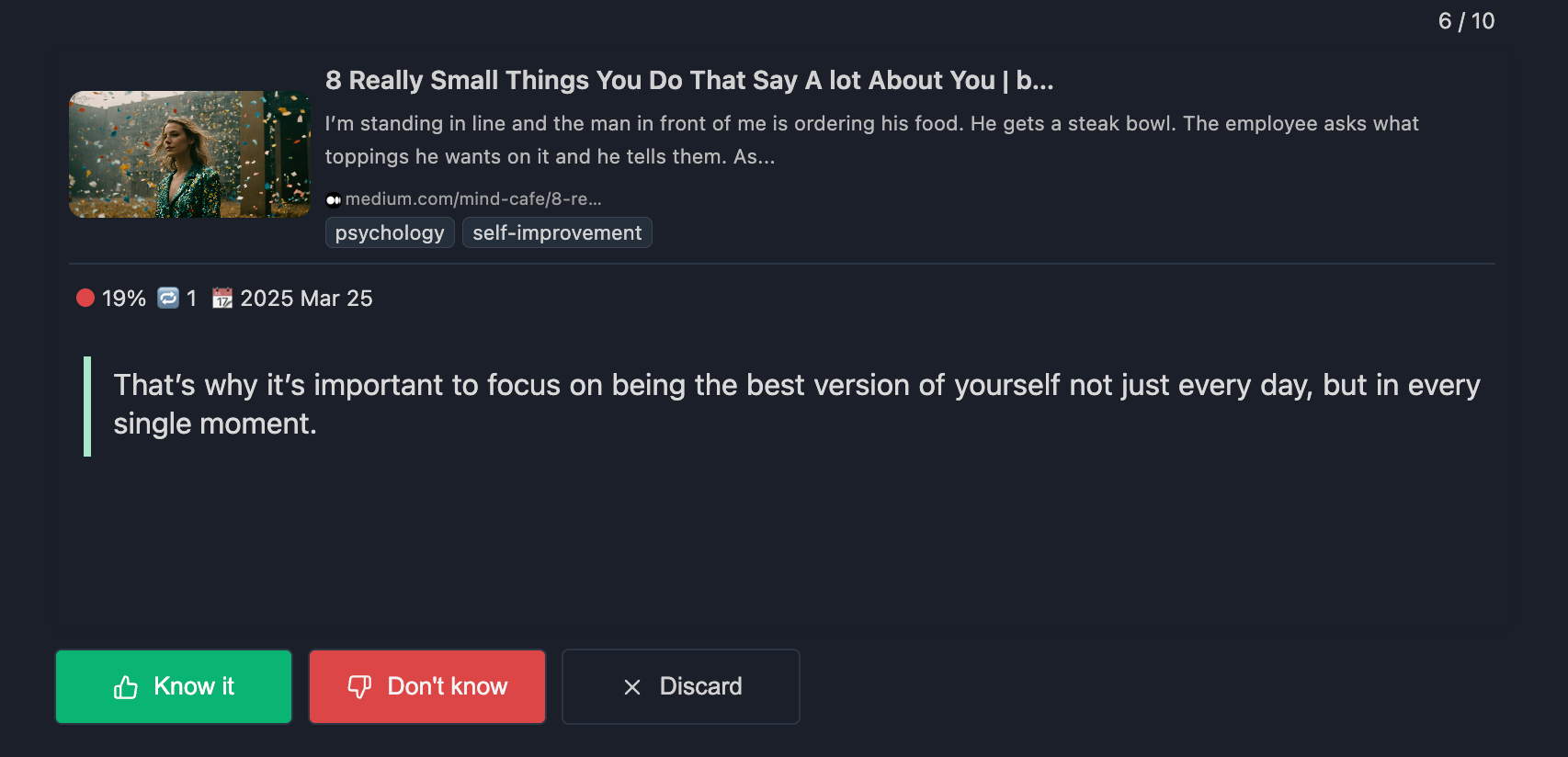
Web Highlights automatically turns your highlights into flashcards and uses spaced repetition to schedule reviews at increasing intervals — based on the SuperMemo (SM-2) algorithm . Each day, you review 10 flashcards and rate each one:
- Know it — confidence increases, next review pushed further out
- Don’t know — confidence decreases, item comes back sooner
- Discard — removes the highlight from future sessions
After about five successful repetitions, an item is considered anchored in long-term memory. Web Highlights also tracks a confidence score (0–100 %) for each highlight and a learning streak that counts consecutive days you completed your daily session. The learning dashboard shows your schedule, confidence breakdown, and a contribution graph — so you always know where your knowledge stands.
7. Reader Mode helps you focus on the material
A cluttered page makes reading harder than it needs to be. Web Highlights also includes Reader Mode, which lets users read without the extra noise on the page.
That cleaner view supports attention and lowers unnecessary cognitive overload. When learners can focus on the actual material, it becomes easier to process ideas deeply and support the memory process.
Read without the noise is not just a convenience feature. It helps create better conditions for learning.
Use AI Summary to reduce overload and find key ideas faster

Sometimes the hardest part of online learning is figuring out what matters most in a long article, PDF, or video. That is where AI Summary can help.
Web Highlights offers AI-powered summaries for websites and YouTube content. Instead of going through everything line by line first, learners can quickly spot the main ideas and then decide what deserves closer reading.
AI Summary can help by showing:
- key points
- a TL;DR
- a headline
- a short teaser-style summary
This helps reduce cognitive overload, makes core ideas easier to spot, and supports information retention before deeper reading starts.
For students, that can mean:
- less time getting lost in long content
- faster understanding of the main idea
- more focus on what to highlight or note down
- better support for later recall
Why this matters for memory, retention, and recall?
Web Highlights supports the full learning cycle:
- highlight what matters
- add notes while the idea is fresh
- tag and group concepts
- find them again later
- review them over time
That is what helps turn reading into something more useful. You are not just collecting information. You are building a system that supports retention of memory, stronger recall, and better long-term memory.
Keep what you read is the real benefit here. When your highlights, notes, and exports stay organized, online learning becomes easier to revisit and easier to remember.
Common Mistakes That Hurt Learning Retention
A few small habits can weaken learning retention even when you spend a lot of time studying.
- Rereading instead of recalling - Reading the same page again can make it feel familiar, but it does less for knowledge retention than retrieval practice.
- Highlighting too much - If almost everything is marked, nothing stands out. That makes the review slower and hurts information retention.
- Studying without review cycles - One-time study sessions do not support long-term retention well. Review matters if you want information to stay in long-term memory.
- Keeping notes across too many tools - Scattered notes make knowledge retrieval harder. When ideas are split across apps, tabs, and files, recall becomes slower.
- Watching videos passively without notes - Watching a lesson without pausing, noting key points, or checking understanding often leads to weak memory formation.
Key Takeaways
Learning is not just about seeing information once. For it to stay useful, it needs memory formation, strong learning retention, and reliable recall.
When students actively work with digital material and come back to key ideas over time, online learning becomes much more effective. Tools such as Web Highlights can help by making it easier to highlight, organize, and review what you read in one place.
Frequently Asked Questions
Why is memory important in online learning?
Memory matters in online learning because students need to store and retrieve information after the lesson ends. Without strong memory formation, even clear lessons fade quickly. Good memory supports learning retention, better exam performance, and stronger understanding across courses.
What improves retention in online learning?
Learning retention improves when students actively work with the material instead of only rereading it. Methods such as active recall, spaced repetition, structured note-taking, and highlighting key points can improve information retention and support long-term memory.
What is the difference between retention and recall?
Retention is how well information stays stored after learning it. Recall is the ability to retrieve that information later without looking at the source. In simple terms, retention of memory is about keeping knowledge, while recall is about bringing it back when needed.
Why do students forget what they study online?
Students often forget online material because digital learning can lead to passive reading, multitasking, and weak review habits. When information is not processed deeply or revisited later, it stays in short-term memory instead of moving into long-term retention.
What tools help improve learning retention?
Tools that support highlighting, annotation, note-taking, tagging, and review can help improve knowledge retention. Web Highlights helps learners save key ideas from web pages, PDFs, and YouTube transcripts so they can review and recall them later.
How does highlighting help with memory and recall?
Highlighting helps when it is selective and paired with notes or review. It supports active learning by prompting students to pause and identify what matters. That deeper processing can improve memory formation, knowledge retrieval, and later recall during revision, writing, or exams.