Verbos Avançados
Estes 12 verbos aparecem menos no dia a dia, mas são comuns em textos, livros e séries — e quase nunca seguem um padrão previsível.
Pratique este baralho de graça — sem precisar de conta. Carrega 12 flashcards no learner.
Praticar no learner gratuitoComo estudar este baralho
Não tente decorar os 12 de uma vez. Aprenda quatro por semana e revise sempre os anteriores antes de seguir.
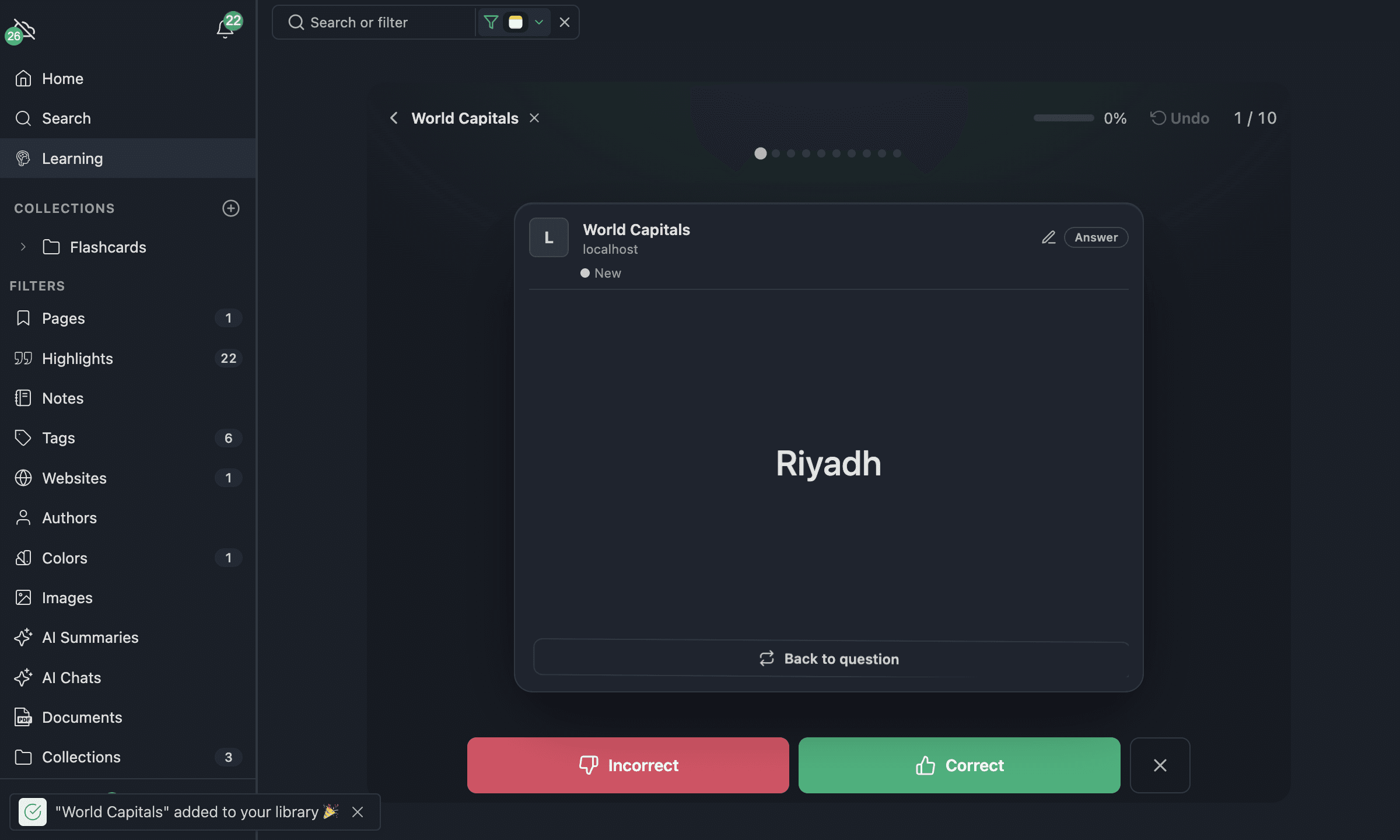
Todos os 12 flashcards
Trocar pergunta e respostawept – wept (chorar, prantear)
weep
She wept quietly during the film.
forsook – forsaken (abandonar, renunciar)
forsake
He forsook his old habits.
dwelt – dwelt (habitar, morar; também “insistir em”)
dwell
They dwelt in the same village for years.
arose – arisen (surgir, originar-se)
arise
A problem arose during the meeting.
bound – bound (amarrar, unir)
bind
The contract bound both parties.
clung – clung (agarrar-se)
cling
The child clung to her mother.
crept – crept (rastejar, mover-se devagar)
creep
The cat crept along the wall.
dug – dug (cavar)
dig
They dug a hole in the garden.
flung – flung (arremessar com força)
fling
He flung the door open.
shrank – shrunk (encolher)
shrink
The shirt shrank in the wash.
spun – spun (girar rapidamente)
spin
The wheel spun for a minute.
thrust – thrust (empurrar com força repentina)
thrust
She thrust the letter into his hands.
O que aprender em seguida
Com isso você fecha os verbos irregulares. Continue com os falsos cognatos, o outro tropeço clássico de quem estuda inglês.